
Anxiety counselling
InnerHub · 2026-08-24 · 20 min read
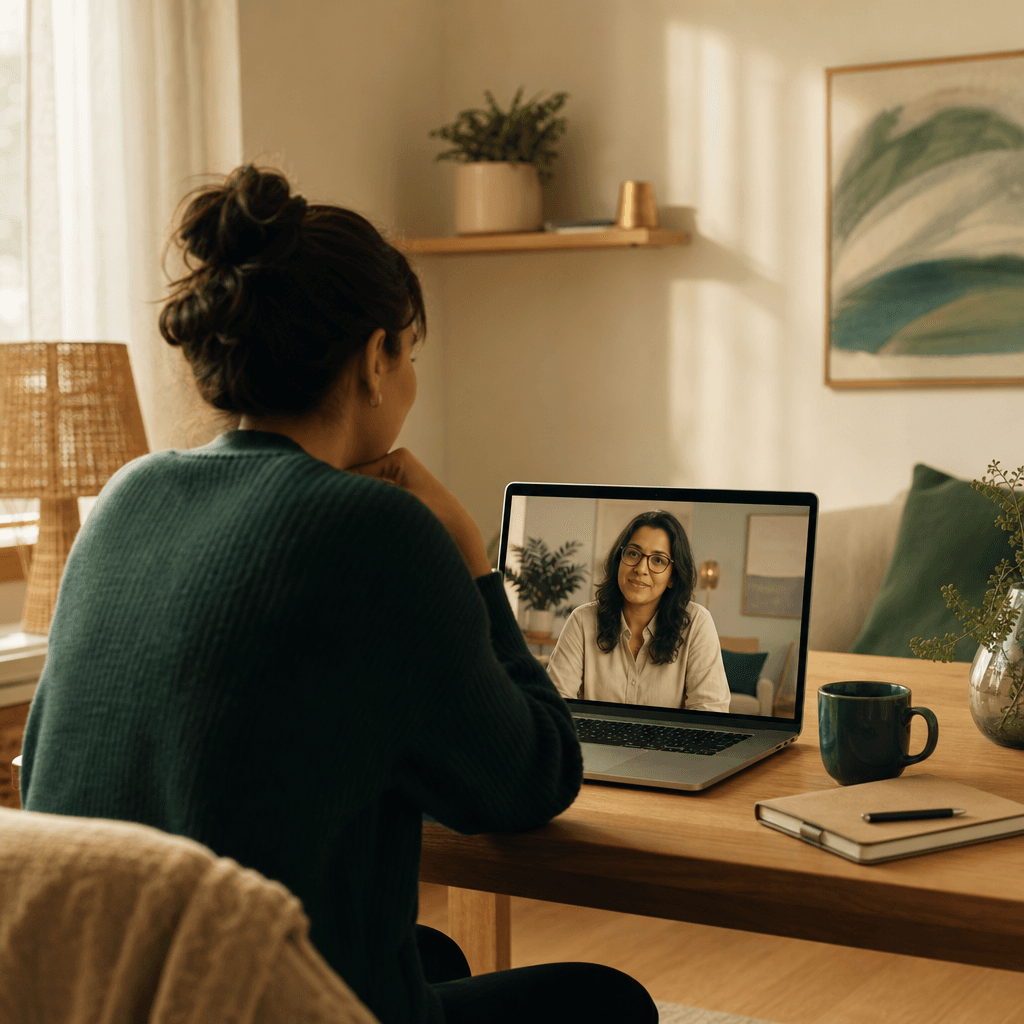
Anxiety counselling helps you understand anxious thoughts, physical reactions and avoidance patterns, then develop practical ways to respond differently. Depending on your needs, counselling may involve cognitive behavioural strategies, gradual exposure, grounding, problem-solving and emotional support. It can be delivered online or in person, with practitioner fit playing a major role.
Anxiety can look like constant worry, panic, disrupted sleep, physical tension or avoiding situations that once felt manageable. It can also look like functioning well from the outside while holding it together, barely.
This guide explains how anxiety counselling works, what a session may involve, which therapeutic approaches are commonly used and how to choose appropriate support. It also covers online counselling, professional boundaries, cost and when anxiety requires urgent or medical care.
Key takeaways
Anxiety counselling should give you more than a place to describe your week. Effective support connects your symptoms to the patterns maintaining them, teaches relevant skills and reviews whether those skills are helping. The right practitioner will also recognise when counselling is not enough and recommend medical, specialist or crisis support.
- Anxiety counselling can address worry, panic, avoidance, social fears, phobias and anxiety linked with stressful experiences.
- A counsellor may help you recognise triggers, challenge unhelpful predictions and approach feared situations safely.
- Therapy should be adapted to the person. Fit matters more than anything else in therapy.
- Online counselling can remove travel, clinic wait lists and time away from work, but it is not suitable for emergencies.
- Check qualifications, professional memberships, insurance, experience, languages and scope of practice before booking.
- InnerHub practitioners do not diagnose conditions, prescribe medication or provide crisis support.
Talk to someone this week
Get matched with your therapist and book a session in minutes. $59.90 flat, no referral, no subscription.
Find a therapistAnxiety counselling at a glance
Anxiety counselling varies according to your symptoms, goals and practitioner. Some people need structured work on avoidance or panic. Others need support with chronic worry, workplace pressure or a major life change. The table below shows what each part of counselling should achieve, rather than prescribing one fixed programme.
| Area | What counselling may involve | What to look for |
|---|---|---|
| Assessment | Discussing symptoms, triggers, safety, health history and current pressures | Clear questions without forcing you to retell everything immediately |
| Shared plan | Agreeing on priorities and how progress will be reviewed | Goals that relate to daily life, not vague promises |
| Skill development | Grounding, breathing, cognitive strategies, communication or problem-solving | Skills selected for your pattern of anxiety |
| Behaviour change | Reducing avoidance and approaching feared situations gradually | A collaborative pace with informed consent |
| Review | Checking what has changed and what remains difficult | Willingness to adjust the approach or practitioner |
| InnerHub access | Online sessions at $59.90 AUD, all inclusive | InnerHub's own pricing is one flat price, always, with no subscription |
What is anxiety counselling?

Anxiety counselling is a collaborative process for understanding and changing the thoughts, emotions, physical sensations and behaviours connected with anxiety. It is not simply reassurance. A capable practitioner helps identify the cycle keeping anxiety active, select appropriate strategies and apply them to situations that matter in your actual life.
Anxiety is part of the body's response to perceived threat. It can be useful when danger is real or when preparation is needed. The problem arises when the alarm continues without a proportionate threat, repeatedly misreads uncertainty as danger or pushes you to avoid important parts of life.
A common anxiety cycle looks like this:
- A situation or internal sensation triggers concern.
- The mind predicts danger, embarrassment, failure or loss of control.
- The body reacts with tension, a racing heart, nausea, sweating or breathlessness.
- The person escapes, avoids, seeks reassurance or checks repeatedly.
- Short-term relief teaches the brain that avoidance was necessary.
The final step is why anxiety can persist. Avoidance feels protective, but it prevents the person from learning that discomfort can pass or that the feared outcome may not occur.
Counselling helps interrupt this cycle. That might mean testing an anxious prediction, reducing reassurance-seeking or approaching a feared task in manageable stages. It can also involve sleep routines, boundaries, emotional processing and practical changes when anxiety is responding to a genuinely difficult environment.
Counselling is not the same as diagnosis. Some counsellors work with people who have a formal anxiety disorder, while others support people experiencing anxiety without a diagnosis. InnerHub practitioners do not diagnose conditions or prescribe medication. If diagnosis, medication or medical assessment is needed, a GP, psychologist or psychiatrist may be appropriate.
When should you consider anxiety counselling?
Anxiety counselling is worth considering when worry, fear or avoidance is persistent, distressing or interfering with daily life. You do not need to wait until anxiety becomes unbearable. Earlier support can help you understand the pattern before avoidance expands into work, relationships, health decisions, travel or ordinary social situations.
Possible signs include:
- worrying that is difficult to switch off
- repeatedly imagining worst-case outcomes
- panic-like episodes or fear of another episode
- avoiding meetings, shops, public transport, driving or social events
- needing frequent reassurance from other people
- checking messages, health symptoms, locks or work repeatedly
- difficulty sleeping because your mind remains alert
- headaches, muscle tension, nausea or digestive discomfort linked with stress
- procrastinating because a task feels threatening
- struggling to concentrate when uncertainty is present
- using alcohol or other substances to manage anxiety
- feeling that life is becoming organised around preventing discomfort
Physical symptoms deserve proper attention. Anxiety can cause strong bodily reactions, but similar symptoms can have medical causes. New, severe or concerning symptoms should be assessed by a health professional rather than assumed to be anxiety.
Healthdirect advises speaking with a doctor when anxiety affects everyday life or when you are worried about your symptoms. Its overview also explains that treatment may include psychological therapy, lifestyle changes and medication where clinically appropriate (Healthdirect).
You do not need a perfectly written explanation before contacting a counsellor. Describe what is happening in ordinary language: "I cannot stop worrying about work", "I avoid places where I might panic" or "I keep checking because I do not trust my memory". No essay required.
If you may harm yourself or somebody else, cannot remain safe, or need immediate help, counselling platforms are not the right starting point. Call Triple Zero or contact Lifeline on 13 11 14. Lifeline provides crisis support by phone, text and chat (Lifeline).
What types of anxiety can counselling address?
Anxiety counselling can support several patterns, including generalised worry, panic, agoraphobic avoidance, social anxiety and specific fears. Symptoms often overlap, so the label is less important than understanding what triggers the anxiety, what the person predicts will happen and what behaviours keep the fear active.
Generalised anxiety
Generalised anxiety involves worry across several areas of life rather than one specific trigger. The mind may move from finances to health, family, work and future uncertainty. Solving one concern provides little relief because another quickly takes its place.
Counselling may focus on distinguishing practical problems from hypothetical worry. Practical problems call for decisions and action. Hypothetical worry repeatedly asks "what if?" without producing a useful next step. A practitioner may also address intolerance of uncertainty, perfectionism and the belief that worrying prevents bad outcomes.
Panic attacks and panic-related anxiety
A panic attack can involve intense fear alongside sensations such as a pounding heart, dizziness, shaking, breathlessness or feeling detached. After an episode, the person may become highly alert to bodily sensations and worry that panic will return.
Counselling can explain the feedback loop between bodily sensations and catastrophic interpretation. The goal is not to promise that discomfort will never happen. It is to reduce fear of the sensations, change unhelpful interpretations and stop life becoming restricted by precautionary behaviour.
Medical assessment matters when symptoms are new or unexplained. A counsellor should not dismiss chest pain, fainting or other concerning symptoms as "just anxiety".
Agoraphobic avoidance
Agoraphobic avoidance often centres on situations where escape or help feels difficult. This can include crowds, public transport, open spaces or being away from home. The person may travel only with someone they trust or build increasingly narrow safety rules.
Therapy generally works on the fear structure and avoidance pattern. Progress may involve approaching situations gradually while reducing safety behaviours. Exposure should be planned collaboratively, not imposed as a test of willpower.
Social anxiety
Social anxiety is more than shyness. It commonly involves fear of being judged, rejected, exposed or visibly anxious. People may replay conversations, script what they will say, avoid eye contact or decline opportunities where attention might fall on them.
Counselling may address assumptions about how others evaluate mistakes. It can also reduce self-monitoring and post-event rumination. Behavioural practice is important because insight alone may not correct predictions about what will happen in a social setting.
Specific phobias
Specific phobias involve intense fear connected with a particular object or situation, such as animals, injections, flying or heights. Avoidance can preserve the fear even when the person understands logically that the risk is limited.
Gradual exposure is commonly considered because it creates new learning through direct experience. The practitioner and client agree on manageable steps, review what happened and avoid turning relaxation into a rule that says the situation is only safe when anxiety disappears.
Anxiety after stressful or traumatic experiences
Anxiety can also follow threatening or overwhelming experiences. Trauma-related conditions are clinically distinct from anxiety disorders, even though hypervigilance, avoidance and physical alarm may overlap. A counsellor supporting trauma-related symptoms should have relevant experience, work within their competence and avoid pushing detailed disclosure before the client has enough stability and choice.
How does anxiety counselling work?

Anxiety counselling usually begins by clarifying what is happening, how it affects daily life and what you want to change. The practitioner then develops a working explanation of the pattern, introduces relevant strategies and reviews the results. Good counselling remains collaborative, practical and responsive rather than following a generic script.
The initial conversation
An initial session may cover current symptoms, triggers, physical health, medication, previous therapy, relationships, work pressures, sleep and safety. You should also have room to ask about the practitioner's approach and experience.
The practitioner is not searching for a perfect answer. They are trying to understand the links between context, thoughts, body responses and behaviour. You can set boundaries around what you are ready to discuss.
A clear working formulation
A formulation is a shared explanation of what may be maintaining the anxiety. For example, a person who fears making mistakes might overprepare, seek reassurance and review every interaction. These behaviours reduce distress briefly, but they prevent the person from learning that an imperfect response can still be acceptable.
A useful formulation is specific enough to guide action. It should also remain open to revision. Anxiety linked with workplace bullying, family violence, discrimination or unstable housing should not be reduced to "negative thinking". Sometimes the environment needs to change alongside the person's coping strategies.
Strategies between sessions
Counselling becomes more useful when ideas are tested in real situations. Between-session work might involve recording predictions, practising grounding, changing a checking routine, scheduling worry or taking one planned step towards an avoided situation.
This should not feel like schoolwork assigned for compliance. The task needs a clear reason and a realistic place in your week. If it is repeatedly not happening, the plan needs adjustment rather than judgement.
Reviewing progress
Progress is broader than feeling calm during every session. Useful signs may include returning to an avoided activity, recovering sooner after a spike in anxiety, making decisions with less reassurance or tolerating uncertainty without checking.
Symptoms may fluctuate. That does not automatically mean counselling has failed. The better question is whether you understand the pattern more clearly and have more choice in how you respond.
Which counselling approaches are used for anxiety?
Several therapeutic approaches may help with anxiety, but no method should be applied without considering the person, problem and practitioner's competence. Cognitive behavioural therapy has a strong role in anxiety care. Other useful approaches may include acceptance-based work, mindfulness, solution-focused counselling and trauma-informed support where indicated.
Cognitive behavioural therapy
Cognitive behavioural therapy, commonly called CBT, examines links between thoughts, emotions, physical sensations and behaviour. It may involve identifying thinking patterns, testing predictions and changing avoidance or safety behaviours.
Healthdirect describes CBT as a structured psychological treatment used for several mental health conditions, including anxiety. It also notes that CBT can involve practising skills between sessions (Healthdirect).
CBT is often misunderstood as replacing every negative thought with a positive one. That is too simplistic. Effective cognitive work asks whether a prediction is accurate, useful and supported by evidence. It also considers alternative explanations without demanding certainty.
Exposure-based work
Exposure involves approaching a feared situation, sensation or memory in a planned way. The aim is new learning, not endurance for its own sake. A person may discover that anxiety can rise and fall without escape, or that a feared outcome is less likely or more manageable than predicted.
Exposure needs consent, pacing and a clear rationale. It should not be sprung on someone. It may also be unsuitable without specialist planning where there are complex trauma symptoms, medical concerns or genuine safety risks.
Acceptance and mindfulness-based strategies
Acceptance-based work helps people make room for uncomfortable internal experiences while acting according to their priorities. This differs from resignation. The person stops making the complete removal of anxiety a condition for living.
Mindfulness can support this by shifting attention from imagined futures to present experience. It is a skill, not a cure-all. For some people, focusing inward can initially intensify distress, so the exercise should be adapted rather than forced.
Practical and supportive counselling
Not every anxiety problem requires a manualised protocol. A person dealing with conflict, caregiving demands or a major decision may benefit from emotional support, communication work and practical problem-solving.
Supportive counselling should still have direction. Repeatedly recounting the same fears without identifying patterns or choices can become another form of rumination. Empathy matters, but empathy and useful change are not opposites.
Is online anxiety counselling effective and appropriate?
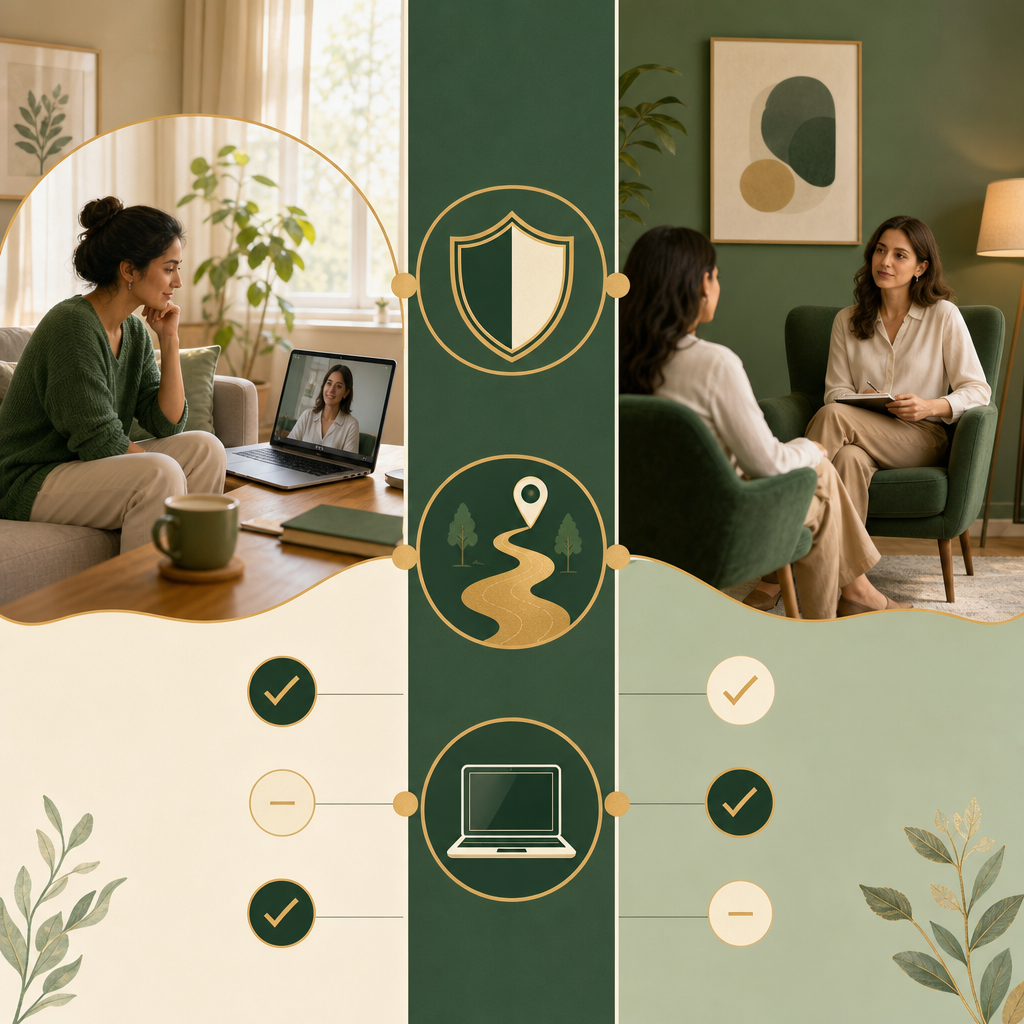
Online anxiety counselling can be appropriate when a person wants private, regular support without travelling to a clinic. It can also make practitioner choice easier. Suitability depends on risk, privacy, technology, communication preferences and the practitioner's competence, not simply whether video counselling is convenient.
Online sessions can be especially practical for people who find travel difficult, live away from suitable services or need appointments in the evenings, without time off. Some people also find it easier to begin talking from a familiar environment.
The limitations matter. A private room, reliable connection and suitable device improve the experience. It may be difficult to speak freely when family members or colleagues can overhear. Sessions from a parked car may offer privacy, but only when the vehicle is stationary, safely located and comfortable.
Before booking, check:
- which video system is used
- how personal information is handled
- what happens if the connection fails
- whether the practitioner can work with clients in your location
- what emergency information is required
- whether sessions are recorded
- how cancellations and payments work
InnerHub sessions take place through secure video inside the platform rather than requiring third-party meeting software. The aim is simple: private, secure, yours. However, no online platform can make a shared room private or replace emergency services.
Online counselling may not be suitable when a person is in immediate danger, requires intensive clinical monitoring or needs assessment outside the practitioner's scope. A responsible service should say this clearly rather than treating every enquiry as a booking opportunity.
How do you choose an anxiety counsellor?
Choose an anxiety counsellor by checking qualifications, relevant experience, professional accountability, communication style and scope of practice. A polished profile is not enough. You need real experience, real availability and enough information to decide whether the practitioner understands your concerns and can work safely within clear boundaries.
Fit matters more than anything else in therapy. That does not mean qualifications are optional. It means credentials and human compatibility both matter.
Useful questions include:
- What are your core counselling or mental health qualifications?
- Where was the qualification earned?
- Do you have experience with my pattern of anxiety?
- Which therapeutic approaches do you use, and why?
- Are you a member of a professional association?
- Do you hold professional indemnity insurance?
- How do you review progress?
- What happens if your approach is not helping?
- What are the limits of confidentiality?
- Can you diagnose or prescribe medication?
InnerHub applies its Trust framework before practitioners see clients. It reviews core qualifications, professional memberships and insurance. Profiles show the degree, institution, country where it was earned, years of experience and languages.
InnerHub also discloses that its practitioners are not AHPRA-registered and do not diagnose conditions or prescribe medication. AHPRA maintains public registers for practitioners in the health professions it regulates (AHPRA). This distinction helps clients understand whether they are booking counselling or a regulated clinical service.
Pay attention to how the practitioner responds when you raise uncertainty. A credible counsellor should be comfortable explaining their approach, limits and referral options. Be cautious about guaranteed outcomes, pressure to book a large package or claims that one method works for everyone.
You should also be free to change practitioners. A mismatch is not proof that therapy cannot help. Sometimes the issue is communication style. Sometimes the practitioner lacks relevant experience. Either way, staying in an unhelpful match because changing feels awkward is not a sound therapy plan.
Affordable once is not the same as accessible regularly
The real test of anxiety counselling access is whether someone can use it consistently, not just afford one appointment. Cost matters, but so do referrals, clinic wait lists, paperwork, travel, scheduling and recurring billing. Each extra point of friction creates another opportunity for a person to delay support.
This is where I disagree with the assumption that quality therapy must carry a $200 price tag, rely on rebates or sit behind a subscription. Online delivery changes the cost structure. Technology, a global practitioner network, differences in overseas living costs and the absence of clinic overhead can reduce prices without hiding practitioner credentials.
InnerHub's own pricing is $59.90 AUD per session, all inclusive. There is no Medicare plan, referral, subscription or session cap. Nothing renews in the background.
That price also removes no gap fee maths. A person knows the full cost before booking rather than trying to calculate rebates, eligibility and remaining appointments. In one case from InnerHub's own booking experience, a client who wanted regular support booked four sessions for $239.60 AUD in total. The per-session cost remained $59.90 AUD.
Price alone does not establish quality. A low-cost service still needs credential checks, secure systems, professional insurance, boundaries and a clear process for changing practitioners. Equally, an expensive appointment is not automatically a better match.
The more useful access question is: can I find an appropriately experienced practitioner, understand the full cost and keep attending often enough to do meaningful work? Therapy that is theoretically available but practically unusable is not accessible.
A shorter booking process can be clinically relevant
Reducing booking friction is not just an administrative improvement. Anxiety often drives delay through overthinking, uncertainty and avoidance. A clear path from deciding to seek help to meeting a practitioner removes opportunities for that cycle to regain control. Access design cannot treat anxiety, but it can stop the booking process from feeding it.
Consider the person who has finally decided to seek support, then encounters referral requirements, forms, unanswered calls and a distant appointment. Every additional step creates another decision. For someone already worried about choosing incorrectly, that friction matters.
InnerHub's How It Works process is deliberately direct:
- Tell us what brings you here.
- Get matched with your therapist.
- Meet on secure video, inside InnerHub.
Most people book their first InnerHub session in under ten minutes, according to InnerHub's own platform data. In one observed booking, a person facing referrals, paperwork and clinic wait lists completed the process in under ten minutes, without a referral or subscription.
Speed should never remove informed choice. Clients still need visible credentials, pricing, privacy information and professional boundaries. The aim is talking this week, not next month, while preserving the information needed to make a sound decision.
How can you prepare for your first session?
You can prepare for anxiety counselling by identifying what feels hardest, how it affects daily life and what you would like to do differently. You do not need to diagnose yourself or prepare a complete history. A few concrete examples give the practitioner enough information to begin asking useful questions.
Before the session, consider noting:
- the situations that trigger anxiety most often
- what you predict will happen
- what you do to prevent that outcome
- how anxiety affects sleep, work or relationships
- previous strategies that helped or made things worse
- medication or health issues relevant to symptoms
- questions about the counsellor's approach
For online counselling, choose a private space and test your connection. Keep water nearby and silence avoidable notifications. If privacy is uncertain, headphones can help, but they cannot prevent someone else hearing your side of the conversation.
You do not need to disclose every painful experience immediately. A first session can focus on current difficulties, safety and goals. Trust should be built, not demanded.
To ask about suitability or booking, use InnerHub's contact page at /contact. If your needs involve diagnosis, medication, urgent risk or support for someone under 18, contact an appropriate Australian health or crisis service instead.
References
These references provide general Australian health, crisis and practitioner-registration information. They do not endorse InnerHub or replace advice from a qualified professional who understands your circumstances. InnerHub pricing, booking times and service boundaries cited in this article come from the client's own supplied business data.
- Healthdirect: Anxiety
- Healthdirect: Cognitive behavioural therapy
- Healthdirect: Mental health treatment plan
- Lifeline: Crisis support
- AHPRA: Registers of practitioners
- Office of the Australian Information Commissioner: Health information
Keep reading in your inbox
Get our free guide to what therapy actually costs in Australia. Name and email only, unsubscribe any time.
Frequently asked questions
Do I need a referral for anxiety counselling?
You generally do not need a referral to book private counselling, although providers set their own requirements. InnerHub does not require a GP referral or Medicare mental health treatment plan. Speak with a GP if you want Medicare-supported services, medication or diagnostic assessment.
How quickly does anxiety counselling work?
There is no universal timeline. Progress depends on the anxiety pattern, severity, life circumstances, consistency, practitioner fit and whether strategies are applied outside sessions. Be cautious about guaranteed relief within a fixed period.
Can a counsellor diagnose an anxiety disorder?
Professional scope varies. InnerHub practitioners do not diagnose mental health conditions or prescribe medication. Contact an appropriately qualified GP, psychologist or psychiatrist if you need diagnosis, medical assessment or formal documentation.
Can I have counselling while taking anxiety medication?
Counselling may be used alongside medication when a prescribing clinician considers it appropriate. Discuss starting, stopping or changing medication with the prescribing doctor, not a counsellor who does not have prescribing authority.
What if I do not connect with my counsellor?
Raise the concern if you feel comfortable. If the fit remains wrong, change practitioners. You are not required to stay because you have already shared personal information. Practitioner credentials, rapport and communication all matter.
Is online anxiety counselling suitable during a crisis?
No. Standard online counselling is not an emergency service. If there is immediate danger, call Triple Zero. For crisis support in Australia, contact Lifeline on 13 11 14. InnerHub is not suitable for crises or people under 18.
InnerHub
The InnerHub editorial team, writing plainly about therapy, money and getting support in Australia.