
About InnerHub
InnerHub · 2026-08-21 · 14 min read
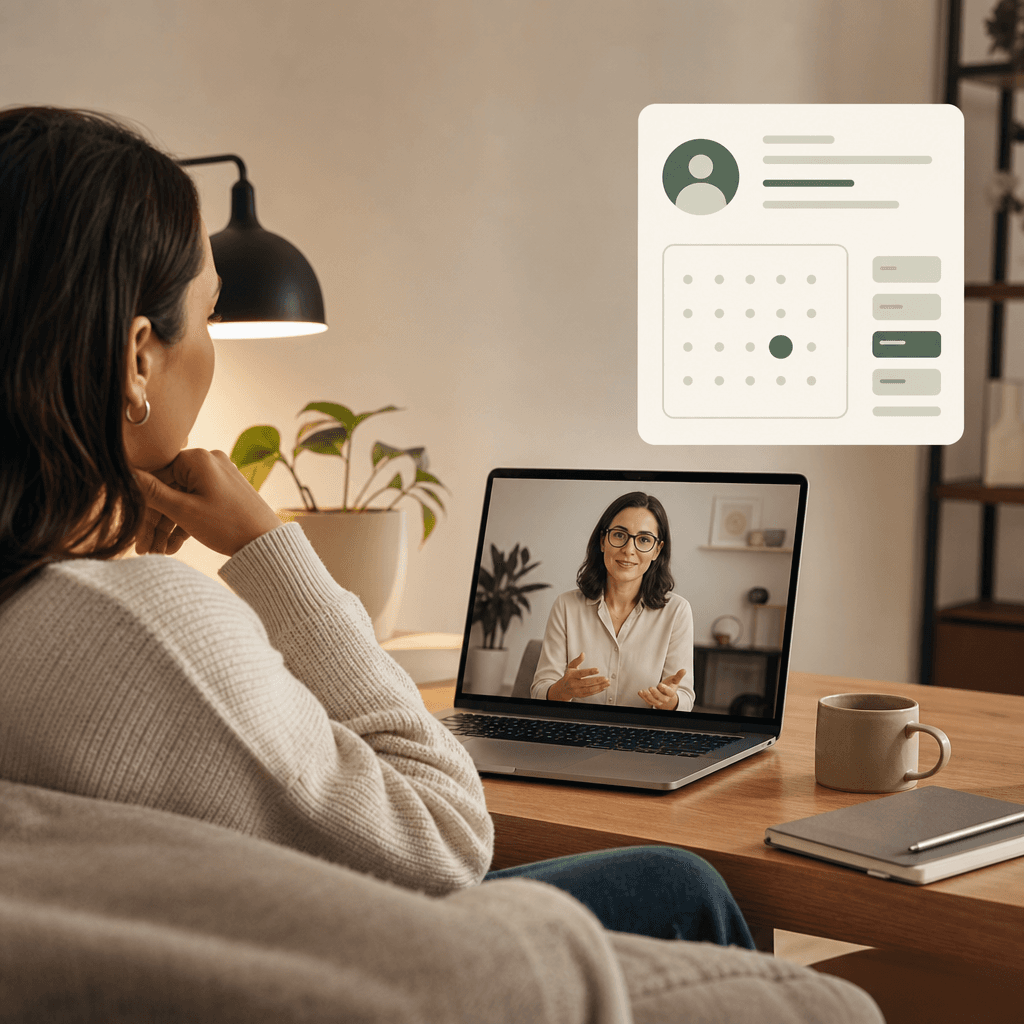
InnerHub is an online therapy platform offering secure video sessions for a flat $59.90 AUD. Adults can review practitioner qualifications, experience, languages and availability, then book without a referral or subscription. InnerHub focuses on accessible ongoing support, while clearly excluding crisis care, diagnosis, prescriptions and services for people under 18.
Therapy is not accessible if you can afford one appointment but cannot use it consistently. Cost matters, but so do clinic wait lists, referrals, paperwork, unclear credentials and billing that renews in the background.
InnerHub addresses those barriers with direct booking, transparent practitioner profiles and secure online sessions. This guide explains what the platform offers, how matching works, what the fee includes and where its professional boundaries sit.
Key takeaways
InnerHub is designed around practical access rather than a single discounted appointment. The platform combines a flat fee, direct booking, transparent practitioner information and secure video sessions. It also states what it cannot provide, allowing adults to make an informed decision before booking or sharing sensitive information.
- Every session costs $59.90 AUD, all inclusive, based on InnerHub's supplied pricing data.
- There is no referral, Medicare plan, subscription or session cap.
- Most people book their first session in under ten minutes, according to InnerHub's supplied booking data.
- Profiles show qualifications, institutions, countries, experience, languages and availability.
- Clients can change practitioners when the fit is wrong.
- InnerHub is not a crisis service and does not provide diagnosis, prescriptions or support for people under 18.
Talk to someone this week
Get matched with your therapist and book a session in minutes. $59.90 flat, no referral, no subscription.
Find a therapistInnerHub at a glance
The platform removes several administrative and financial barriers that commonly stand between deciding to seek support and attending a session. This table summarises the InnerHub model, including its fee, booking approach, practitioner disclosures and limits. Figures are drawn from InnerHub's own pricing and booking data supplied for this article.
| Area | InnerHub approach | Source or position |
|---|---|---|
| Session price | Flat $59.90 AUD, all inclusive | InnerHub pricing data supplied for this article |
| Booking speed | Most people book their first session in under ten minutes | InnerHub booking data supplied for this article |
| Commitment | No subscription or session cap | InnerHub service model supplied for this article |
| Referral | Not required | InnerHub service model supplied for this article |
| Sessions | Secure video inside InnerHub | InnerHub How It Works framework |
| Practitioner information | Qualifications, institution, country, experience and languages shown | InnerHub Trust framework |
| Clinical boundaries | No crisis care, diagnosis, prescriptions or services for people under 18 | InnerHub service boundaries supplied for this article |
What is InnerHub?

InnerHub is an online platform connecting adults with experienced therapy practitioners for private video sessions. It is built for people seeking regular emotional support without clinic overheads, referral requirements or subscription billing. Clients can compare practitioners, check their credentials and book available appointments directly through the platform.
The core proposition is straightforward: online therapy, without the $200 price tag.
That lower fee is not based on hiding charges or automatically enrolling clients into a recurring plan. InnerHub uses technology, a global practitioner network, differences in overseas living costs and the absence of physical clinic overheads to keep the session price at $59.90 AUD.
This creates a different model from private clinic billing. There is no rebate calculation and no gap fee maths. The listed price is the amount paid for the session.
InnerHub is intended for adults who may be dealing with concerns such as stress, relationships, grief, low mood, work pressure or feeling as though they are holding it together, barely. It can also suit people who want reflective support without claiming that they have a diagnosable condition.
The platform does not replace psychiatric care, emergency support or services requiring an Australian-registered health practitioner. It occupies a defined space: accessible online therapy from practitioners whose backgrounds and boundaries are disclosed before booking.
How does InnerHub work?

InnerHub uses a direct process called How It Works: explain what brings you to therapy, receive suitable practitioner options, select your preferred match and meet through secure video inside the platform. No referral, lengthy intake essay or separate video application is required before booking a standard session.
Tell us what brings you here
The starting questions help narrow the available practitioners according to the support being sought. The aim is relevant matching, not forcing someone to write a detailed personal history before they have chosen whom to trust.
No essay required. A client should provide enough information to guide the match, while retaining control over what they discuss during the session itself.
Get matched with a therapist
Clients can review suggested practitioners and inspect the information available on their profiles. That includes qualifications, where those qualifications were earned, professional experience, languages and appointment availability.
Availability matters alongside credentials. An impressive profile is of limited use if the practitioner cannot meet when the client is free. InnerHub's model is designed around real experience, real availability, including options for evenings without time off where practitioner schedules permit.
Meet through secure video
The session happens through video inside InnerHub rather than requiring the client to install or manage unrelated third-party meeting software. This keeps the booking and session journey in one place.
The intended experience is private, secure, yours. Clients should still choose a quiet location, use a private device where possible and consider whether other people can overhear the conversation.
A real booking journey
In a booking journey observed by InnerHub, a person encountered the usual access barriers: clinic wait lists, referrals and paperwork. They used the platform to identify a suitable practitioner and completed their first booking in under ten minutes. No referral or subscription was required.
That outcome reflects what direct access should look like. Someone who has decided to seek support should be able to move towards talking this week, not next month, provided an appropriate practitioner is available.
What does the $59.90 session fee include?
The flat $59.90 AUD fee covers the booked online therapy session, platform access and secure video appointment. There is no subscription charge, clinic gap payment or compulsory package. Clients choose whether and when to book again, so nothing renews in the background without an active booking decision.
Price clarity is part of access. A cheap introductory appointment means little if later sessions cost more, require a plan or depend on an expiring promotion. InnerHub's position is one flat price, always.
Based on the business data supplied for this article, a client who booked four sessions paid $239.60 AUD in total. Each appointment remained $59.90 AUD. The client could calculate the complete cost before committing to regular support.
This model is separate from Medicare-funded mental health services. Services Australia explains that Medicare support for mental health treatment can involve an eligible referral and mental health treatment plan (Services Australia). InnerHub does not require either.
That distinction does not make one pathway universally better. A person who needs assessment, diagnosis, medication management or care from an AHPRA-registered practitioner should use an appropriate Australian health service. InnerHub is for adults who understand its scope and want accessible therapy within it.
Affordability should also be assessed across continued use. The meaningful question is not simply, "Can I pay for the first session?" It is, "Can I return when I need support?"
How does InnerHub assess practitioner trust and fit?

InnerHub's Trust framework reviews practitioner qualifications, professional memberships and insurance, then presents key details in plain language. Profiles identify the degree, institution, country, experience and languages. They also disclose that practitioners are not AHPRA-registered and do not diagnose conditions or prescribe medication.
Qualifications should be visible before booking
A generic claim that someone is "qualified" is not enough. The client should be able to see what the qualification is, where it was earned and the country in which the practitioner trained.
That context matters when working with a global network. Professional titles, training pathways and registration systems differ between countries. InnerHub does not collapse those differences into a vague badge. It provides the available details so the client can assess them before paying.
AHPRA maintains Australia's public register of registered health practitioners (AHPRA). InnerHub practitioners are not AHPRA-registered, and the platform states that clearly rather than encouraging assumptions based on job titles.
Experience and language shape the working relationship
Formal education is only part of practitioner fit. A client may care about experience with a particular concern, fluency in a preferred language or familiarity with a relevant cultural context.
These factors can affect how easily someone explains a situation and whether the practitioner understands its practical context. InnerHub profiles therefore show years of experience and languages alongside qualifications.
Fit matters more than anything else in therapy
Credentials establish a threshold. They do not guarantee that two people will communicate well. Tone, pace, questioning style and personal comfort only become clear through interaction.
InnerHub clients are free to change practitioners if the match feels wrong. Changing does not mean therapy has failed or that either person is at fault. It means the client is paying attention to the working relationship.
A practical first-session assessment can focus on questions such as:
- Did I feel heard rather than managed?
- Could the practitioner explain how they work?
- Did their questions help clarify the issue?
- Were the boundaries of the service clear?
- Would I feel comfortable returning?
The goal is not instant certainty. It is enough confidence to decide whether another conversation would be useful.
Who is InnerHub for, and when is it not appropriate?
InnerHub is for adults seeking non-crisis online therapy who understand that its practitioners do not diagnose, prescribe or hold AHPRA registration. It is not suitable for emergencies, immediate safety concerns, people under 18 or situations requiring medical assessment, medication management or regulated Australian clinical care.
The platform may suit adults who:
- want to book without obtaining a referral
- need evening or flexible online availability
- prefer to know the complete fee before attending
- want to review practitioner credentials and languages directly
- are looking for ongoing emotional support rather than diagnosis
- do not want a subscription or automatic renewal
It may not be the right service when a person needs a formal diagnosis, a medical certificate, medication, emergency intervention or treatment from an AHPRA-registered practitioner. In those circumstances, a GP, registered psychologist, psychiatrist, hospital or another suitable Australian service should be contacted.
InnerHub is not a crisis service. Healthdirect advises calling 000 where life is in immediate danger and lists crisis support options, including Lifeline on 13 11 14 (Healthdirect). A person concerned about their safety should use those services rather than waiting for an InnerHub appointment.
Clear exclusions are not a weakness. They are part of ethical service design. A platform should not accept every client merely because a booking can be processed.
Why repeatable care is the real affordability test
My view is that therapy access should be judged by whether someone can use it consistently, not whether they can afford a single appointment. A low-friction booking process and a predictable fee matter because emotional support often works through continued conversations, not one isolated session purchased during a difficult week.
Much of the therapy market treats a high private fee as evidence of quality. I do not accept that price alone proves competence, fit or value.
Clinic rent, reception, local operating costs and billing administration all contribute to traditional pricing. They do not automatically improve the conversation between practitioner and client. A carefully assessed global network and online delivery can reduce those costs without concealing practitioner backgrounds or service limitations.
This is why InnerHub's model combines affordability with disclosure. Low cost without transparent credentials would be inadequate. Credentials without realistic access would also be inadequate. People need both.
The same logic applies to booking friction. Every unnecessary step creates another point at which someone can postpone seeking support. A referral may be essential within a clinical or Medicare pathway, but it should not be imposed on a service that does not require it. Subscription billing may suit some businesses, but it should not be the price of entry to a personal conversation.
The contrarian position is simple: regular, high-quality online therapy can be offered at $59.90 AUD without a Medicare plan, referral, subscription or session cap. The price is possible because the operating model is different, not because the professional boundaries are hidden.
How to decide whether InnerHub is right for you
InnerHub may be appropriate if you want accessible adult therapy, understand the platform's non-clinical boundaries and can identify a practitioner whose background fits your needs. Before booking, review the profile carefully, confirm the language and availability, consider what you want from the conversation and check whether another service is more suitable.
Start with the outcome you want. This does not need to be a perfect therapy goal. It might be understanding a repeating relationship pattern, handling work stress or having a confidential space to think clearly.
Then inspect the practitioner information rather than choosing solely from a photograph or broad description. Look at:
- the qualification and awarding institution
- the country in which the qualification was earned
- relevant experience
- available languages
- appointment times
- the stated scope and boundaries
Finally, decide whether the service model itself suits you. InnerHub is built for online sessions. A person who strongly prefers a physical consulting room should choose an in-person provider. Someone seeking diagnosis or medication should select a suitably registered clinician.
If the model fits, visit /contact to ask a question or begin finding a practitioner. There is no need to commit to a subscription before learning whether the service is appropriate.
References
These sources clarify the external Australian systems mentioned in this article, including practitioner registration, Medicare mental health pathways, crisis assistance and privacy principles. InnerHub's price, booking time and operating model are proprietary business information supplied directly for this article and are identified as such above.
- Australian Health Practitioner Regulation Agency, Registers of Practitioners
- Services Australia, Mental health care and Medicare
- Healthdirect Australia, Mental health crisis support
- Office of the Australian Information Commissioner, Australian Privacy Principles
Keep reading in your inbox
Get our free guide to what therapy actually costs in Australia. Name and email only, unsubscribe any time.
Frequently asked questions
How much does InnerHub cost?
InnerHub costs $59.90 AUD per online therapy session, all inclusive. There is no subscription, compulsory package or Medicare plan requirement. Four sessions cost $239.60 AUD in total.
Do I need a GP referral or mental health treatment plan?
No. InnerHub does not require a GP referral or mental health treatment plan. Adults can provide matching information, review suitable practitioners and book directly.
Are InnerHub practitioners registered with AHPRA?
No. InnerHub practitioners are not AHPRA-registered. Profiles show their qualifications, awarding institution and country, professional experience and languages so clients can make an informed choice.
Can an InnerHub practitioner diagnose me or prescribe medication?
No. InnerHub practitioners do not diagnose mental health conditions or prescribe medication. People requiring diagnosis, prescriptions or medication management should contact an appropriately registered Australian health practitioner.
Can I change practitioners?
Yes. Clients can choose another practitioner if the match is not right. Communication style, experience, language, trust and availability can all affect therapy fit.
Is InnerHub suitable for a crisis or for someone under 18?
No. InnerHub is not a crisis service and is not available to people under 18. If life is in immediate danger, call 000. Healthdirect also lists immediate crisis support services.
InnerHub
The InnerHub editorial team, writing plainly about therapy, money and getting support in Australia.